Press Release · Florida International University
FIU bioengineers create portable tool to spot preterm birth risk
Distributed by Major Health News · Originally issued via PR Newswire
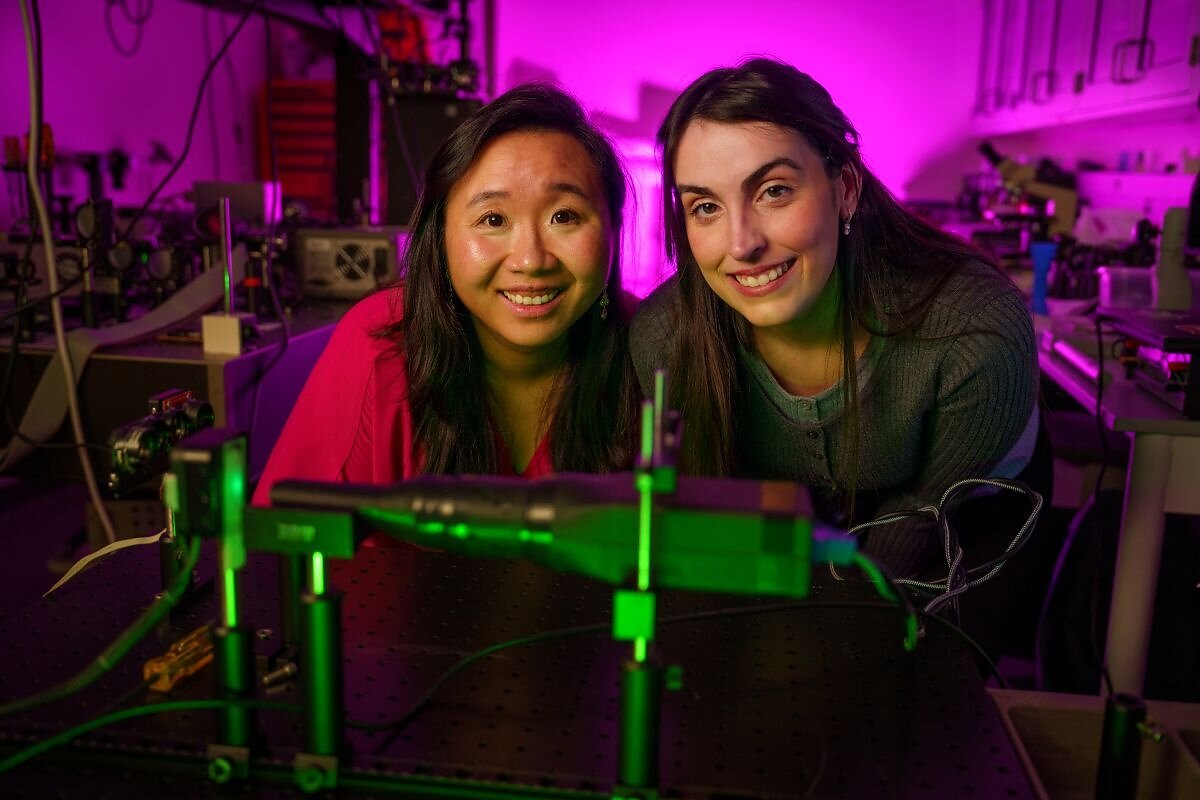
MIAMI, Nov. 10, 2026 — Biomedical engineers at Florida International University have built a portable imaging device designed to detect early signs of preterm labor risk in about five seconds.
The system, called PPRIM (Portable Preterm Imaging), could flag risk up to three months earlier than current screening methods. Every 40 seconds, a baby dies from complications of preterm birth, totaling over 2,000 babies globally a day. Preterm birth rates are rising, yet doctors have few reliable ways to determine which pregnancies are most at risk. Babies born before 37 weeks face higher risk of brain, developmental and breathing problems.
"There aren't many tools for monitoring this invisible process, and what we do have now is insufficient," said Jessica Ramella-Roman, an FIU professor of biomedical engineering who leads the university's Medical Photonics Lab and has been developing the technology for more than a decade.
Current screening options carry significant limitations. Manual physical exams of the cervix miss an estimated 70% of at-risk pregnancies. Lab tests checking for protein warnings are only useful late in pregnancy, while ultrasound measures the length of the cervix without necessarily revealing risk. During a healthy pregnancy, the cervix holds the baby securely, strengthened by collagen fibers arranged like rope strands. As delivery approaches, those fibers naturally loosen and become disorganized. In preterm births, this breakdown begins too soon.
PPRIM addresses these diagnostic blind spots by shining special polarized light onto the cervix to capture images of how the collagen fibers are arranged. Custom software converts those images into a color-coded map: cooler colors indicate organized fibers and lower risk, while warmer colors signal disorganization and higher risk.
A pilot study at Jackson Health, published in the Journal of Biomedical Optics, supported disorganized tissue structure as an early warning sign. Initially built with a bulky colposcope — a magnifying instrument used for cervical exams — years of refinement and several patents have reduced the system into a portable, handheld format.
Doctoral students JunZhu (Jenny) Pei and Amanda Sanchez, who work in Ramella-Roman's lab, are leading the effort to commercialize PPRIM as PolarDoc. Through the National Science Foundation's Innovation Corps (NSF I-Corps) entrepreneurship program, the team interviewed roughly 100 physicians, nurses, mothers and insurers, finding strong demand for the tool. The team also advanced to the final eight at this year's Hult Prize competition.
"Instead of reacting to preterm labor once it has begun, doctors and clinicians could prepare for it and intervene to prevent it," Pei said. "That shift, from responding to anticipating, is where we believe lives can be saved."
Looking ahead, the team is working with Baptist Health South Florida toward a clinical trial in pregnant women, guided by Dr. Larry Spiegelman, medical director of Women's Services at Baptist Hospital and clinical assistant professor at FIU's Herbert Wertheim College of Medicine. Data will support the FDA approval process. Researchers also are exploring whether the technology can be adapted to screen for cervical cancer.
"While cervical insufficiency accounts for a smaller percentage of preterm births, preventing even a single premature delivery has a profound impact on a patient, their family, and our whole healthcare system," Spiegelman said. "Depending on the results of the clinical trials, PPRIM may provide clinicians a minimally invasive tool to identify risk earlier — allowing us to perform interventions like cervical cerclage, prolong pregnancy and administer critical medications that significantly protect a baby's lung and brain development."
Photos and videos for media use are available via Dropbox. A media asset guide featuring select quotes, clip length and other metadata is also available.
Media Contact:
Madeline Baró
(305) 310-9665
[email protected]
news.fiu.edu
@FIU
SOURCE Florida International University